Round vs Square Bistro Tables: Which One Fits a Small Café Better?

A small café owner faces a real challenge: every square foot counts, and the choice of dining table shape affects how many guests sit down, how easily they move, and how the room feels.
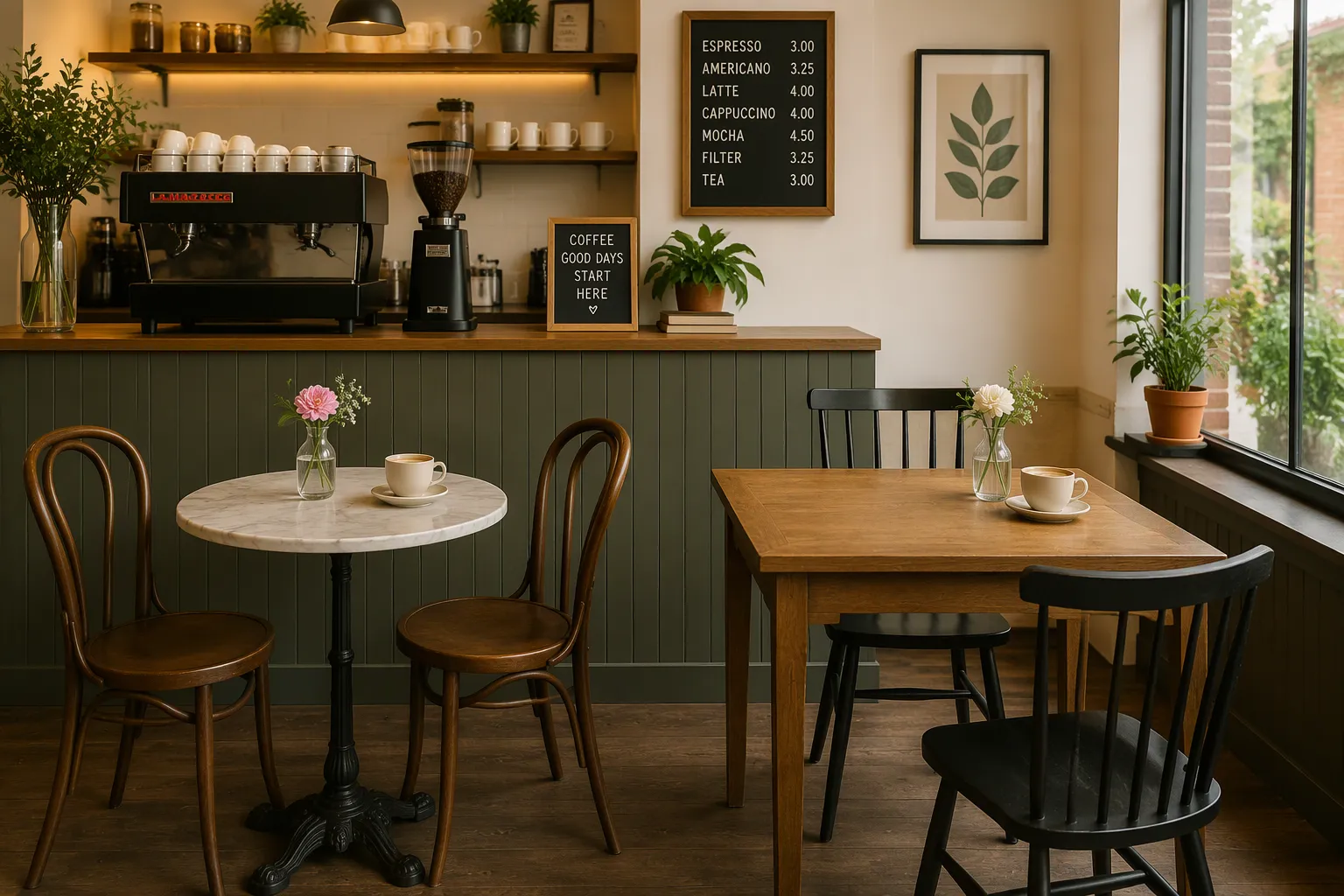
A small café owner faces a real challenge. Every square foot counts, and the choice of dining table shape affects three things at once: how many guests sit down, how easily they move, and how the room feels.
Both round or square bistro tables have good points. The right shape for cafés and restaurants depends on one main goal: maximizing seats, improving flow, or crafting the guest experience. No single answer fits every room. A Round Bistro Table, for example, brings a soft, welcoming silhouette that encourages conversation and pairs naturally with compact footprints.
This comparison weighs each table shape against practical criteria, from space efficiency to seating capacity. It closes with a simple decision guide. Owners can then match the shape of a bistro table to their own café type, whether that means a narrow corner spot or a patio-heavy layout—and a Round Bistro Table often shines in both.
Key Takeaways
Round tables help people move easily because they have no sharp corners.
Square tables save space by fitting tightly against walls and corners.
Round tables make conversation better for small groups because everyone faces the center.
Square tables can be pushed together to seat larger groups.
A mix of round and square tables often works well for a small café.
Round tables need more empty space around them for chairs and walking.
Square tables give a café a clean, modern look and can increase seating capacity.
Think about your café's main goal—seats, flow, or atmosphere—before choosing a table shape.
Round or Square Bistro Tables: The Short Answer
Both shapes work well in a small café. The right choice for round or square bistro tables depends on the café's top priority: seats, flow, or atmosphere.
What Round Tables Do Best
Round bistro tables improve movement. They have no sharp corners , so guests and staff pass more easily through tight aisles. Everyone seated at a round bistro table faces the center , which makes conversation natural and keeps the setting cozy. These tables suit cafés that want a relaxed, social feel and a softer look. A round dining table also lets a host pull up an extra chair for an unexpected third guest without anyone hitting a corner.
What Square Tables Do Best
compact laminate cafe tables use floor space efficiently. Their straight edges sit flush against walls , railings, and corners, so narrow layouts lose less usable area. They line up in rows and push together for larger parties. This shape gives a café a clean, structured look and helps maximize seating capacity . For a busy café with a fixed floor plan, square bistro tables often fit more covers into the same room.
How to Use This Comparison
The choice among round, square or rectangular dining tables comes down to one question. Does the café need more seats, smoother flow, or a warmer mood? The sections below compare round vs square bistro sets on space, layout, comfort, capacity, and style. Each part ends with practical guidance. A short decision guide at the close helps owners match the dining table shape to their own café type.
Space Efficiency of Square Bistro Tables
Square bistro tables are known for working well in tight rooms. Their straight edges sit flat against walls, railings, and corners. Because of this, a narrow layout loses almost no usable space. A square top also lines up neatly with the table next to it, which keeps aisles straight and easy to predict. Round tops give up some of that tight packing for a softer shape, and they need a little more free space around the edge.
Fitting Corners and Walls
A square set makes the most of tight corners . The flat sides meet two walls at once, and the table looks like part of the room rather than something just set down in it. Balcony layouts and narrow café terraces often favor square models for this exact reason. Square dining tables also line up easily with a railing or a bench, which leaves more walking room along the open side.
Round tops handle the same corner less neatly. A curve leaves wedge-shaped gaps that no chair can use. Those gaps matter in small spaces, where every inch of limited floor space should be put to good use.
The Clearance Round Tables Need
Round dining tables need a wider free space around them. Planners often use 36 inches as a helpful starting point between the table edge and a wall, cabinet, or other furniture. Where people often walk behind seated guests, 42 to 48 inches gives a more comfortable path for moving around.
Clearance | Recommended Use |
|---|---|
36-inch clearance | Useful starting point between the table edge and a wall, cabinet, or other furniture |
42 to 48 inches | More comfortable circulation path where people regularly walk behind seated guests |
That clearance space adds up fast across a whole floor. A room with limited space may fit fewer round tops than square ones of similar size.
Planning a Small Café Layout?
Review seating math, compact laminate specifications and technical data before choosing table shapes.
A Two-Person Footprint Example
Think of a small two-person round bistro table as a reference point. The Round Outdoor Bistro Table has a Ø700 mm (27.56 in) top, a 720 mm total height, and a 700 × 700 mm four-star base footprint. The top is 12 mm phenolic compact laminate , and the column and base are steel. The top weighs 6.7 kg and the base 4.0 kg, for about 10.7 kg in total — a summed estimate rather than an official figure.
A small two-top of this kind, whether square or round, usually needs about 54 × 54 inches (1370 × 1370 mm) once chairs are added. The table itself is rarely the problem. The space around it decides how many covers a café can run.
Layout Flexibility: Square Versus Round Tables
A café rarely serves the same crowd all day. Weekday mornings bring pairs and solo guests. Weekend afternoons bring groups of four, six, or more. The square versus round tables decision shapes how easily a room adapts to that swing.
Why Square Tables Combine Easily
Square bistro tables work like building blocks . Staff push two square tops together and get a clean, continuous surface for four. Push four together and a party of eight sits as one group. No separate inventory of large communal tables is needed, and no half-empty six-top sits idle during a quiet Tuesday.
This modular quality suits rectangular rooms especially well . Square dining tables sit flush against a wall or window line and leave a clear aisle on the open side. They also rotate 45 degrees to break up a rigid grid. A dining room built mostly from square two-tops can shift into long communal seating for a Saturday party with few compromises, provided the tops and bases are compatible for joining.
Where Round Tables Limit Grouping
Round dining tables cannot join as neatly. Two round tops pushed together leave curved gaps at the seam, and guests end up with an awkward shared edge. A host who needs one large table often splits the group across several rounds instead, which divides the conversation.
Round tops also need clearance around the full perimeter. That requirement makes them less efficient near walls and in long, narrow rooms. A 36-inch round seats four comfortably in roughly the same footprint as a 36-inch square, yet it cannot be joined. A 48-inch round seats five to six, while a 48-inch square seats six to eight depending on chair size. Round tables still earn their place in open dining rooms, patios, and lounge areas where groups mix freely.
Planning a Layout That Can Change
The strongest approach for most cafés is a mixed plan. Square two-tops form the backbone along walls and windows, where they maximize the perimeter. A few rounds in corners, near windows, or in the center soften the room and give larger groups a social table.
Planners typically allow about 18 inches between the backs of chairs at neighboring tables as a minimum, with wider main aisles for service. Check that every aisle still works once chairs pull out. This thinking applies across bistro and café layouts of any size, and it sets up the decision guide later in this article.
Customer Experience at a Round Bistro Table
Guests notice table shape before they notice the menu. A round bistro table changes how a room feels and how people act in it. The shape quietly sets the mood of the whole visit.
Conversation and Cozy Atmosphere
A round top pulls people inward. Everyone faces the center, so each guest can talk with the whole group at once. No seat sits at the "head" of the table, and no guest stares at an empty chair across from them. One design guide puts it plainly:
"A round dining table suits those who prefer a smaller, more intimate feel as it allows your guests to easily converse with everyone at the table and share a 'family-style' meal together."
The circle also makes people feel included. There are no edges for a patron to feel left out or alone. Couples often pick these tables, and the lack of corners creates a sense of comfort. A round dining table gives a soft look and a quaint vibe that suits a casual café, coffee house, or bistro. Guests tend to stay longer, and a longer stay often builds a warmer link with the brand.
The Structured Feel of Square Tables
Square tops read as clean, modern, and orderly. Their straight lines create smooth sight lines across a dining room. The shape also supports a more formal style of service. A symmetrical arrangement of cutlery and dishes looks elegant on a square surface, which suits brunch, lunch, and set menus with several distinct plates.
This structure has a practical side. Square tables are modular , and staff can place them side by side to enlarge the reception area for events or group meals. The trade-off is social. Corners can act as small barriers between guests, and corner-to-corner conversation gets tricky in a noisy room. Neither shape wins outright. Each one simply sets a different tone.
Matching Shape to Your Café's Vibe
The right table shape should echo the identity a café wants to project. Owners can compare the two options on ambiance and practical fit :
Table Shape | Ambiance and Brand Fit | Practical Considerations |
|---|---|---|
Round | Promotes conversation, communal dining, and a cozy, welcoming mood | Takes more floor space; less adaptable for large groups |
Square | Clean lines, orderly structure, and a modern feel | Seats four typically; corners can intrude on walkways in small cafés |
Mix | Maximizes space and diversifies the look of the room | Needs a clear plan for which zones get which shape |
A bar area often looks rounded, which makes it a natural spot for a round bistro table or a high-top. Square tables work well in corners and in clean central rows. A thoughtful mix lets a small café serve both the guest who wants a quiet chat and the group that needs to spread out.
Seating Capacity: Scaling from Solo Guests to Groups
A café's seating plan must serve one person with a laptop at 9 a.m. and a group of six at 3 p.m. Table shape decides how well a room handles that range. Square tops scale up for groups with little effort. Round tops serve small parties and pairs with more grace.
How Square Tables Scale Up
Square bistro tables combine flush. Staff push two tops together and the seam disappears into one flat surface. A party of four sits as a single unit, and a party of six or eight grows from the same parts. This modular quality lets a café reach its maximum seating capacity during a rush and break the room back down afterward. No large table sits empty during a slow morning.
Square dining tables also line up in rows along a wall. That arrangement packs covers into a narrow room and keeps aisles straight. A café that hosts meetings, study groups, or family lunches gains real flexibility from this approach.
Why Round Tables Suit Small Parties
Round dining tables shine with pairs and small groups. Everyone faces the center, so a party of four holds one conversation with no one stranded at a far end. Banquet-style seating often places chairs around small round tables, and hosts can shrink the format to an intimate table for four. That social geometry makes round bistro tables a natural fit for coffee dates and afternoon tea.
The Round Outdoor Bistro Table shows this use case well. Its makers describe it as comfortable for 2-person dining and ideal for coffee and afternoon tea. A café that serves mostly couples and solo guests can build its floor plan around that two-person unit. One caution applies to any small party: round tops can take up more room than expected once everyone sits down. Pull the chairs out before the event and walk between the tables to confirm the spacing works.
Balancing Two-Tops and Four-Tops
A simple rule of thumb helps most small cafés. Run roughly two-thirds of the seats as two-tops and one-third as four-tops, then keep a few square units free to join on demand. This mix lets a café increase covers without crowding and still seat a group without turning anyone away.
The right ratio depends on the crowd. A laptop-friendly café near offices leans toward two-tops. A brunch spot near a park leans toward four-tops. Owners who weigh capacity: round vs rectangular dining tables side by side usually find that a mixed plan beats either shape alone. One bistro table placed near the window can anchor the room while square units do the heavy lifting elsewhere.
Flow and Accessibility with Round Bistro Tables
Movement decides how a small café feels during a rush. Guests need a clear path to the counter, the restroom, and the door. Staff need room to carry trays without weaving. Table shape plays a direct role in both.
Improving Foot Traffic
A round top has no corners. Guests walk past a curve without catching a hip or a bag, and the eye reads the gap as wider than it is. This small effect adds up across a full room. One planning source describes the advantage plainly:
Round tables are among the most effective solutions for tight dining rooms. Without corners, they improve movement around the room and reduce the chance of bottlenecks. They also encourage conversation and feel less intrusive in narrow layouts.
A round bistro table also lets a server step in from any side to set down a cup or clear a plate. That freedom shortens trips and keeps customer flow steady at peak hours. A square top forces staff to approach from a fixed angle, and a chair back often blocks that angle.
Spacing Rules for Square Tables
Square bistro tables need careful spacing to keep aisles clear. Straight edges sit close together, and a tight row can pinch the walking path. Planners use a few working numbers to protect circulation:
Chair zone: about 18 inches from the table edge to the back of a seated guest's chair.
Between tables: about 42 inches edge to edge where chairs sit back to back, and 60 inches or more where a service aisle runs between them.
Service aisles: 36–44 inches for secondary aisles and 48–60 inches for main traffic aisles where servers carry trays.
Exits: exit widths come from the local fire code, so confirm them with the architect and fire marshal.
A café that runs square units should mark these zones on the floor plan before it orders furniture. A single misplaced row can close a main route.
Accessibility and Comfort
Accessible seating belongs in every café layout, not tucked into one back corner. The 2010 ADA Standards set a table height range of 28 to 34 inches , and that range covers standard dining tables. Counter and bar-height tops sit above it, so a café with mostly high seating still needs standard-height options for guests who use wheelchairs.
A center pedestal base can block a wheelchair from pulling up close. A four-leg frame or a split base leaves clear space underneath. Round bistro tables help here too, because a guest can approach from any point on the curve. Distribute accessible seats across several zones, and recheck the paths after any furniture move or seasonal reset. A bistro table shifted for a holiday display can quietly close the only wide route in the room.
Style and Design: Modern Edge vs Classic Charm
Table shape sets the visual tone of a café before a guest reads a single word on the menu. A room full of straight edges reads one way. A room full of curves reads another. Neither look is better. Each one simply signals a different kind of place.
The Clean Lines of Square Tables
Square bistro tables bring order to a room. Their straight edges create strong sight lines, and rows of them look deliberate and calm. A guest sees a grid, and a grid suggests efficiency and modern design. This look suits a café with an industrial interior, concrete floors, or a minimalist brand identity.
Square dining tables also frame a space well. They sit flush against a wall and define a clear boundary between the seating zone and the walkway. A designer can line them up along a window and the room still looks tidy. The shape supports a crisp, contemporary mood, and it pairs naturally with metal chairs, pendant lighting, and open shelving.
The Timeless Look of Round Tables
Round bistro tables soften a room. The curve breaks up hard lines and gives the eye a place to rest. A café with many round tops feels warmer and more relaxed, and the look carries a classic charm that stays in style. This shape suits a cozy neighborhood spot, a bakery café, or a space with wood tones and fabric seating.
Finish choices can push that soft look further. The Round Outdoor Bistro Table shows one approach. Its top carries a matte Calacatta 7378 finish , a marble-look surface with a natural and elegant appearance. Black edge banding frames the top, and a black steel column and four-star base sit below. An aluminum mounting plate joins the top to the column. The result reads as premium and understated, and the marble pattern adds visual interest without shouting.
Pairing Shape with Materials and Décor
The dining table shape should answer to the room around it. A café with exposed brick and dark wood gains contrast from a light marble-look round top. A café with white walls and pale oak gains weight from a black square frame. Material and shape work as a pair, and one can balance the other.
A few practical checks help before a purchase. Confirm the top thickness and edge detail match the chairs, since a thin top can look lost beside a heavy frame. Check that the base style fits the floor, because a four-star base reads lighter than a solid pedestal. Then step back and view the room as a guest would. The table shape should support the brand story, whether that story is modern and precise or warm and familiar.
Indoor vs Outdoor Use for Round Bistro Tables

A café owner often needs one table to do two jobs. The same round bistro tables may sit on a sidewalk at noon and move inside when the weather changes. In a small business, being able to switch is important. The shape and the material decide how well a table works in both places.
The Round Outdoor Bistro Table shows this double duty clearly. Its makers list four uses: outdoor restaurant, balcony, café, and indoor dining area. That range covers most of what a small café needs. A guest can drink coffee on a patio in the morning and sit at the same style of table inside later that day.
Sidewalks and Patios
Outdoor service puts a table in sun, rain, and changing temperatures. The top material takes most of that stress. HPL, aluminum, synthetic teak, composite, and resin all handle UV light, moisture, and temperature changes without warping or fading. Real teak works well too, but it needs teak oil or marine sealer once a year.
The 12 mm phenolic compact laminate top on the Round Outdoor Bistro Table fits this outdoor job. It resists weather and scratches, and it wipes clean easily. A café can clean it between guests without special products. A round dining table with this kind of top works well on a sidewalk spot where space is tight and cleaning happens often.
Two related material resources help owners compare tabletop finishes and sheet options before ordering.

Compact Laminate Sheets
Decorative compact laminate panels used for café tabletops and worktops.
View Product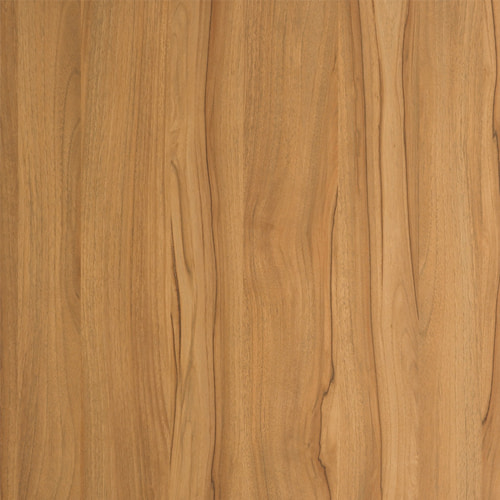
HPL Sheet Catalogue
A catalogue of high pressure laminate sheets for commercial interior applications.
View ProductTight Indoor Corners
Indoor dining rooms ask different things of a table. Solid hardwood, HPL, and sintered stone are the most common indoor choices. Hardwood brings warmth and a surface that can be refinished. HPL gives durable, low-maintenance performance. Sintered stone pairs a modern look with high scratch and heat resistance.
A round top earns its place in a tight indoor corner. The curve has no sharp edge to catch a passing tray, and guests can slide in from any side. Cafés that stock indoor bistro sets for small spaces often pick a round top for this exact reason. The shape softens a cramped corner and keeps the walkway open.
Weather, Storage, and Weight
Weight decides how easily staff move a table for cleaning or a seasonal reset. The Round Outdoor Bistro Table weighs about 10.7 kg in total. This is a summed estimate from a 6.7 kg top and a 4.0 kg base, not an official figure. One person can move it without help, and two can stack a patio for the night.
Material | Setting | Benefit |
|---|---|---|
Laminate | Indoor | Easy cleaning |
Wood | Indoor | Warmth |
Resin | Indoor | Durability |
Metal or composite | Indoor | Industrial feel |
Aluminum | Outdoor | Weather and sun resistance, longevity |
Resin | Outdoor | Weather and sun resistance, longevity |
Treated wood | Outdoor | Weather and sun resistance, longevity |
A bistro table that moves between zones should keep its finish in both. Commercial-grade construction keeps the frame steady through daily wear and constant cleaning. That steadiness lowers long-term replacement costs and keeps a small café's furniture budget predictable.
Need Materials for Indoor and Outdoor Service?
Compare outdoor tabletop materials and see where compact laminate round tables are used.
Decision Guide: Square Versus Round Tables

The comparison across space, layout, comfort, capacity, flow, and style now points to a single practical step. An owner can turn those findings into a short checklist. The square versus round tables question rarely has one universal answer. It has a suitable answer for each room, each menu, and each style of service.
Choose Round If…
A round top earns its place when movement and mood matter more than raw seat count. The checklist below covers the strongest cases for a round model.
Guests and staff need a clear path through a tight room, and corners would otherwise catch trays or bags.
Conversation sits at the heart of the visit, and pairs or small groups should face each other with ease.
The brand leans warm, cozy, or classic, and the room needs curves to soften hard lines.
The floor plan includes a patio, a balcony, or a window spot where a sociable table anchors the space.
The café serves mostly couples, solo guests, and afternoon tea crowds rather than large parties.
A narrow corner café often fits this profile. The room may hold only a handful of seats, and every aisle doubles as a service route. A round bistro table lets a server approach from any side and keeps the walkway open. The curve also makes a cramped corner feel less tight.
Choose Square If…
A square top wins when the room must produce covers and adapt on demand. The checklist below covers the strongest cases for a square model.
The layout has walls, railings, or corners that a straight edge can use without waste.
Capacity is the top priority, and the café needs to seat as many guests as the floor allows.
Groups arrive throughout the day, and staff must join two-tops into four-tops or six-tops without gaps.
The interior follows a modern, industrial, or minimalist direction with clean sight lines.
The café hosts meetings, study sessions, or family lunches that call for a structured surface.
A patio-heavy café with a steady lunch trade often leans this way. Square bistro tables line up along the railing, pack the perimeter, and convert into long group seating for a weekend rush. Staff reset the room in minutes once the crowd thins.
When a Mix Makes Sense
Many venues skip the either-or choice entirely. They run both shapes and assign each one to the zone where it performs well. This approach captures the strengths of each option and covers more guest types.
A workable split follows the room itself. Square units form the backbone along walls and windows, where they maximize the perimeter and join easily. A few round tops sit near the entrance, in the center, or on the patio, where they soften the space and welcome small groups. The mix also gives guests a choice. A pair can pick a quiet round table, and a party of six can claim a joined square setup.
Owners who weigh compact laminate cafe tables for a mixed plan should map the zones before ordering. Mark the joinable rows, the social corners, and the main aisles on the floor plan. Then confirm that each zone still works once chairs pull out. This step prevents a common mistake, where a joined group blocks the only route to the counter.
The right shape for cafés and restaurants depends on the room, not on a trend. Owners who value flow, conversation, and a softer atmosphere should lean toward round or square bistro tables with curves. Owners who value corner efficiency, capacity, and clean lines should lean toward straight edges. A mix serves the many cafés and restaurants that need both. For buyers comparing options, manufacturer documentation can clarify dimensions, finishes and joining compatibility.
No single table shape suits every café. Round tables help with flow and conversation. Square tables help with capacity and flexibility. Owners should think about their top one or two priorities, like seats, movement, or atmosphere, and let those priorities choose the shape. Trends change, but a room's real needs stay the same.
A narrow corner café with tight aisles often leans toward curves. A patio-heavy spot with a busy lunch trade often leans toward straight edges. Many owners just use both and give each shape a suitable zone. For café owners comparing round and square models, documented dimensions and base designs make the final comparison clearer.
Ready to Source Bistro Tables?
Check manufacturing details, worktop trade-offs and finish options for café projects.
Do round tables really save space in a small café?
Not necessarily. A round top leaves wedge-shaped gaps in a corner, and it needs clearance around the full curve. Square tops pack tighter against walls. Round tables win on movement instead, because guests pass a curve without catching a corner.
How much room does a two-person bistro table need?
Plan on roughly 54 × 54 inches (1370 × 1370 mm) once chairs are added, whether the top is round or square. The table itself is small. The chair zone around it decides the real footprint.
Can two round tables be pushed together for a group?
Only awkwardly. Two curves meet at a single point and leave gaps at the seam, so guests end up with a split surface. Square tops join flush and form one continuous table. Groups of six or more sit better on joined squares.
Is a round table better for conversation?
Yes, for small parties. Every seat faces the center, so each guest can talk with the whole group. No one sits at a head position. Square tops suit structured service better, and their corners can block corner-to-corner talk in a noisy room.
What clearance keeps aisles walkable?
Allow about 18 inches from the table edge to the back of a seated chair. Use roughly 42 inches between tables where chairs sit back to back, and 36–44 inches for secondary service aisles. Confirm exit widths with the local fire code.
Can one bistro table work indoors and outdoors?
Yes, if the top handles both. A 12 mm phenolic compact laminate top resists weather, scratches, and stains, and it wipes clean easily. Check the weight before moving it daily. A table around 10.7 kg suits one person.
Does table height matter for accessibility?
It does. The 2010 ADA Standards set a table height range of 28 to 34 inches, which covers standard dining tables. Counter-height tops sit above that range. A center pedestal can block a wheelchair, so a four-star or split base leaves clearer space underneath.
Which shape suits a café that serves mostly couples?
Round fits that crowd well. Pairs and small groups hold one conversation with ease, and the curve softens a tight room. A two-person round table sized for coffee and afternoon tea makes a sensible building block for a plan built around couples and solo guests. Buyers comparing options can source round bistro tables from a reliable manufacturer such as HUAJIALE.
References and Notes
federal accessibility standards for dining surfaces and routes (access-board.gov, accessed 2026-11-25)
the 2010 ADA Standards table height range (ada.gov, accessed 2026-11-25)
codes and standards referenced for exit widths (nfpa.org, accessed 2026-11-25)
Data notes: clearance and aisle figures are industry planning ranges, not code minimums; the 28 to 34 inches table height comes from federal accessibility standards; the 700 mm table, 12 mm top and 10.7 kg summed estimate are a manufacturer-stated product example, not official industry figures; exit widths must be confirmed under local fire code.
Internal links: the original in article link positions are retained, with destinations remapped one to one to matching official pages; the quoted design guidance is retained from the original article and is not used as a numerical source.
CATEGORIES:

 Contact Us

 Online Sales

 Case Study

 News Center

 Product Brochure