Why You Should Select Chemical Resistant Laminate for Lab Countertops?

Laboratory countertops endure harsh chemical exposure daily. Selecting chemical resistant laminate for lab surfaces delivers protection, cost savings, and reliability that traditional materials cannot match. Industry experts recommend this material for compelling reasons:
- Superior resistance to acids, bases, and solvents protects against surface damage
- Non-porous construction prevents contamination and bacterial growth
- Up to 40-60% cost savings compared to epoxy or stainless steel alternatives
- Lightweight installation reduces structural costs and project timelines
- Typical 15-20 year lifespan in demanding laboratory environments
- Easy maintenance with standard cleaning protocols saves operational costs
Laboratories worldwide rely on chemical resistant board to maintain safe, functional work surfaces throughout years of intensive use.
Key Takeaways
- Chemical resistant laminate protects lab surfaces from concentrated acids, bases, and solvents that degrade standard materials
- The material costs significantly less than alternatives while delivering comparable performance for most laboratory applications
- Non-porous surfaces meet strict hygiene standards required in medical and research facilities
- Simple installation and maintenance reduce both upfront and ongoing operational expenses
- Proper grade selection ensures the material matches specific chemical exposure levels in each laboratory
- Lightweight construction eliminates expensive structural reinforcement needed for heavier countertop materials
- Certified manufacturers provide chemical resistance documentation that helps laboratories specify appropriate products
- Selecting quality chemical resistant board from established suppliers protects laboratory investments and ensures consistent performance
What Is Chemical Resistant Laminate?
Material Composition and Structure
Chemical resistant laminate consists of multiple kraft paper layers saturated with phenolic resin, compressed under extreme pressure and heat. This high-pressure laminate (HPL) process creates a dense, non-porous surface that chemicals cannot penetrate. The phenolic resin core provides chemical resistance, while the melamine surface layer offers durability and cleanability. Standard laboratory-grade sheets measure 0.9mm to 1.5mm thick and bond to particleboard or plywood substrates.
Manufacturing applies high pressure at elevated temperatures. This creates molecular bonds that form barriers against chemical penetration. The resulting material weighs significantly less than stone or metal alternatives while maintaining professional-grade protection.
| Property | Specification | Lab Benefit |
Core Material | Phenolic resin kraft paper | Chemical resistance |
Surface Layer | Melamine overlay | Scratch resistance, cleanability |
Thickness | 0.9-1.5mm laminate | Durability for daily use |
Standards | Verified chemical protection |
Why This Construction Matters for Labs
The phenolic resin composition specifically resists chemicals that destroy standard laminate surfaces. Educational laboratories handling routine experiments, medical facilities processing samples, and industrial quality control departments all benefit from this engineered protection. The material maintains integrity when exposed to substances that would stain, swell, or dissolve conventional countertops.
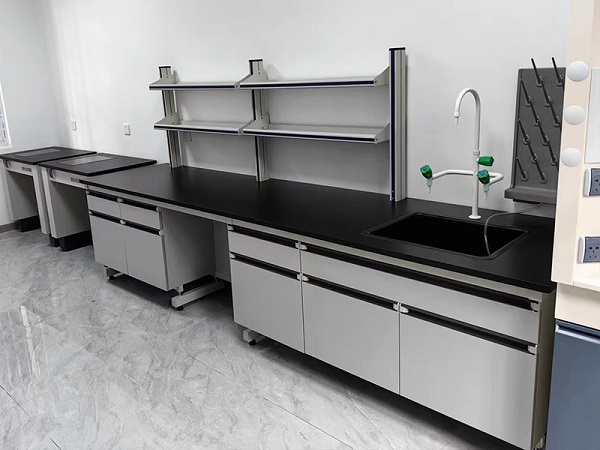
Why Chemical Resistant Laminate Delivers Superior Lab Performance
Reason 1: Exceptional Chemical Protection
Laboratory work demands surfaces that withstand aggressive chemical exposure. Chemical resistant laminate protects against:
- Strong Acids: Sulfuric acid, hydrochloric acid, nitric acid cause no surface damage during standard exposure tests per laboratory testing protocols
- Alkaline Solutions: Sodium hydroxide and potassium hydroxide at working concentrations leave surfaces unchanged
- Organic Solvents: Acetone, methanol, ethanol, and toluene do not penetrate or stain the material
- Oxidizing Agents: Hydrogen peroxide and bleaching compounds maintain surface integrity
This protection prevents the discoloration, swelling, and structural failure that compromises experimental accuracy. Laboratories avoid contamination from degraded surfaces affecting sensitive analyses. The material's chemical resistance stems from phenolic resin molecular structure that creates effective barriers against reagent penetration.
Standard materials fail under these conditions. Wood countertops absorb chemicals and harbor bacteria. Basic laminate surfaces stain permanently and delaminate. Chemical resistant board maintains appearance and function through years of exposure.
Reason 2: Significant Cost Advantages
Budget constraints affect every laboratory decision. Chemical resistant laminate delivers professional performance at competitive prices compared to alternatives:
- Initial Costs: Typically 40-60% less than epoxy resin surfaces, 60-75% less than stainless steel
- Installation Expenses: Lightweight construction reduces labor costs and eliminates structural reinforcement
- Maintenance Savings: No special cleaning products or procedures required
- Replacement Cycles: 15-20 year typical lifespan spreads costs over extended periods
Educational institutions equipping multiple teaching laboratories achieve substantial savings. Research facilities can allocate budgets toward equipment rather than infrastructure. Industrial quality control departments reduce capital expenditures while maintaining professional standards.
Total ownership costs reveal even greater value. The material requires only standard laboratory cleaners, reducing ongoing chemical expenses. Quick installation minimizes facility downtime. These factors make chemical resistant board the economical choice for laboratories operating within institutional budgets.
Reason 3: Hygienic Non-Porous Surface
Laboratory hygiene standards require surfaces that prevent bacterial colonization. Chemical resistant laminate's non-porous construction blocks moisture absorption that enables microbial growth. This characteristic proves essential in:
- Medical Laboratories: Clinical testing requires sterile surfaces that facilitate disinfection
- Pharmaceutical Facilities: Drug development demands contamination control throughout processing
- Food Testing Labs: Safety testing cannot risk sample contamination from work surfaces
The sealed surface tolerates frequent cleaning with alcohol solutions, quaternary ammonium compounds, and hydrogen peroxide. This compatibility simplifies regulatory compliance and safety protocol adherence. Laboratories maintain required cleanliness standards without special procedures or expensive cleaning systems.
Surface texture prevents bacterial adherence that leads to biofilm formation. Sealed edges eliminate gaps where contaminants accumulate. Quick-drying properties minimize moisture exposure time that promotes bacterial growth.
Reason 4: Outstanding Physical Durability
Beyond chemical resistance, laboratory countertops must survive daily physical demands. Chemical resistant board withstands:
- Impact Resistance: Dropped glassware and equipment cause minimal surface damage
- Scratch Resistance: Hard melamine surface resists marking from routine laboratory tools
- Moderate Heat Tolerance: Handles equipment and glassware up to 140°C without damage
- Stain Resistance: Indicator solutions and biological materials wipe clean without permanent marks
This durability maintains professional appearance through years of intensive use. Surfaces remain functional and attractive without costly refinishing. Laboratories avoid downtime from damaged countertops requiring replacement.
The material's hardness prevents impressions from pencils, pens, and marking instruments. Minor scratches remain invisible during normal use. This resilience reduces maintenance requirements while supporting efficient laboratory operations.
Reason 5: Simple Installation Process
Installation complexity affects project costs and facility disruption. Chemical resistant laminate offers significant advantages:
- Lightweight Handling: Material weight allows easier transportation and positioning than stone or metal alternatives. Installation teams work more efficiently, reducing labor expenses.
- Standard Tools: Conventional woodworking equipment cuts and shapes the material. No specialized installation equipment or extensive training required.
- Flexible Fabrication: Custom sizes and configurations accommodate laboratory layouts without expensive custom manufacturing.
- Quick Turnaround: Installation proceeds rapidly, minimizing laboratory downtime during renovations or new construction.
These factors make chemical resistant board practical for laboratories with limited budgets or tight project schedules. Facilities can upgrade surfaces without extensive disruption to ongoing operations.
Reason 6: Minimal Maintenance Requirements
Operational efficiency depends on surfaces that require minimal ongoing care. Chemical resistant laminate simplifies maintenance:
- Daily Cleaning: Wipe with mild detergent or standard laboratory cleaners—no special products needed
- Spill Management: Prompt cleanup with appropriate absorbents prevents potential issues
- Disinfection: Apply approved disinfectants following facility protocols without surface damage concerns
- Periodic Inspection: Check seams and edges for lifting—address early to prevent moisture infiltration
This straightforward maintenance reduces labor costs and keeps surfaces in service. Laboratories avoid expensive specialized cleaning systems or professional maintenance contracts. Staff handle routine care using established procedures and readily available supplies.
The non-porous surface prevents stain absorption that requires aggressive cleaning. Most substances wipe away easily, maintaining appearance with minimal effort. This ease of maintenance contributes to the material's favorable total ownership costs.
Reason 7: Proven Long-Term Reliability
Laboratories need surfaces that perform consistently over extended periods. Chemical resistant laminate has demonstrated reliability in countless installations worldwide:
- Educational Facilities: Teaching laboratories report 15+ years of service with minimal degradation
- Medical Centers: Clinical testing areas maintain hygiene standards throughout decades of use
- Industrial Plants: Quality control laboratories confirm sustained chemical resistance over time
- Research Institutions: Specialized laboratories document consistent performance across varied applications
This track record provides confidence that properly specified chemical resistant board will deliver expected performance. Laboratories avoid premature replacement costs and operational disruptions from failed surfaces. The material's reliability supports consistent experimental conditions essential for accurate scientific work.
Long service life spreads initial investment over many years, improving return on investment. Facilities plan confidently knowing surfaces will support operations throughout their useful life without unexpected replacement needs.
Why Chemical Resistant Laminate Works for Your Laboratory Type
Educational Laboratories
Schools and universities face unique challenges balancing performance with budget constraints. Chemical resistant laminate solves this problem by providing professional-grade protection at institutional prices. Students handle various chemicals during experiments, creating frequent spill scenarios. The material tolerates this exposure while maintaining appearance through thousands of student contact hours.
Budget-conscious institutions equip multiple teaching laboratories with consistent quality. The cost savings allow schools to purchase more equipment or serve more students. Maintenance simplicity works well with custodial staff capabilities. These factors make chemical resistant board the logical choice for educational environments.
Medical and Clinical Laboratories
Healthcare facilities require surfaces that support strict hygiene standards. Chemical resistant laminate's non-porous construction prevents bacterial growth while facilitating required cleaning protocols. The material resists common biological reagents, disinfectants, and cleaning solutions used in medical testing.
Sample preparation areas benefit from surfaces that won't contaminate specimens. Testing stations maintain cleanliness between patients. The material's chemical resistance handles the variety of substances used in medical diagnostics. Healthcare laboratories specify chemical resistant board when hygiene and reliability matter most.
Quality Control Facilities
Manufacturing plants conduct routine testing requiring durable, chemical-resistant work surfaces. Chemical resistant laminate withstands specific reagents used in quality assurance processes while supporting efficient workflows. The material's cost-effectiveness makes sense for facilities equipping multiple testing stations.
Inspection surfaces remain clean and professional-looking despite daily use. Chemical testing areas maintain functionality without expensive specialized materials. Industrial laboratories select chemical resistant board when practical performance meets budget requirements.
Research Laboratories
Scientific research demands reliable surfaces that won't compromise experimental integrity. Chemical resistant laminate provides appropriate protection for general research applications while allowing budget allocation toward specialized equipment. The material handles routine chemical exposure common in most research protocols.
Specialized research with extreme chemical exposures may require premium materials, but general research laboratories find chemical resistant board entirely adequate. The material supports consistent experimental conditions while keeping infrastructure costs reasonable. Research facilities specify chemical resistant laminate when standard laboratory work represents primary applications.
Why Proper Selection Ensures Success
Matching Grade to Application
Chemical resistant laminate comes in grades designed for different exposure levels:
- General Purpose Grade: Suitable for educational settings with light chemical exposure. Handles common reagents at working concentrations. Appropriate when budget considerations outweigh extreme performance requirements.
- Laboratory Grade: Provides enhanced resistance for professional laboratory environments. Handles regular chemical exposure from routine testing and research. Represents the standard choice for most medical, industrial, and research facilities.
- Industrial Grade: Delivers maximum protection for demanding applications with frequent concentrated chemical exposure. Justified when chemical contact intensity requires premium performance.
Selecting appropriate grade prevents both under-specification that leads to premature failure and over-specification that wastes budget. Laboratories should match grade to actual chemical exposure rather than assuming premium grades suit all applications.
Why Edge Treatment Matters
Edges represent vulnerable points where improper treatment causes premature failure. Chemical resistant laminate requires proper edge protection:
- Self-Edge Construction: Wrapping laminate around edges creates seamless protection. This method provides optimal moisture and chemical resistance. The investment pays off through extended countertop life.
- PVC Edge Banding: Economical edge treatment works adequately for lower-exposure applications. Proper installation prevents lifting that exposes substrate to damage. Budget-conscious laboratories use this approach when appropriate.
- Metal Edge Guards: Stainless steel or aluminum strips protect high-traffic edges from impacts while sealing against penetration. Heavy-use laboratories benefit from this premium edge treatment.
Poor edge treatment undermines even the highest-quality laminate. Moisture infiltrates exposed substrate causing swelling and delamination. Proper edge specification protects the laboratory's investment.
Why Surface Finish Affects Performance
Surface finish selection impacts both function and appearance:
- Matte Finish: Reduces glare from overhead lighting, improving visibility during detailed work. Hides minor wear better than glossy surfaces. Most laboratories prefer this practical finish.
- Textured Finish: Provides slip resistance beneficial in wet environments. Slight texture prevents glassware from sliding during use.
Color selection balances aesthetics with practicality. Neutral grays and blacks conceal minor staining while maintaining professional appearance. Light colors provide better sample contrast but show stains more readily. Laboratories should consider actual use patterns when specifying color.
Why Quality Suppliers Make the Difference
Material quality varies significantly between manufacturers. Selecting reliable suppliers ensures laboratories receive chemical resistant laminate that performs as specified:
- Manufacturing Consistency: Established suppliers maintain quality control throughout production. ISO 9001 certification indicates systematic quality management. Consistent manufacturing delivers predictable performance.
- Technical Documentation: Comprehensive chemical resistance charts verify performance claims. Detailed installation guidelines support proper implementation. Suppliers should provide responsive technical support for specification questions.
- Material Certification: NEMA LD3 compliance confirms independent testing has verified chemical resistance. Certifications provide confidence that materials meet claimed specifications.
- Industry Experience: Suppliers specializing in laboratory applications understand unique requirements. Their expertise helps laboratories avoid specification errors that compromise performance.
For laboratories seeking reliable chemical resistant board solutions, working with established China HPL suppliers combines quality materials with competitive pricing. HUAJIALE manufactures chemical resistant laminate specifically designed for laboratory environments, providing both standard products and custom solutions supported by comprehensive technical expertise.
Why Chemical Resistant Laminate Delivers Long-Term Value
Investment evaluation requires looking beyond initial purchase price:
- Extended Service Life: Properly specified chemical resistant board typically provides 15-20 years of service. This longevity spreads costs over extended periods, reducing annualized expenses significantly.
- Maintenance Cost Savings: No special cleaning products or procedures required. Standard laboratory supplies and protocols suffice. This simplicity reduces ongoing operational costs compared to materials needing specialized care.
- Operational Reliability: Consistent surface performance prevents experimental disruptions from countertop degradation. Laboratories avoid costs from failed experiments, equipment contamination, or safety incidents caused by compromised surfaces.
- Replacement Flexibility: When surface replacement eventually becomes necessary, chemical resistant laminate installs quickly with minimal disruption. Lightweight construction simplifies removal and installation compared to heavier alternatives.
These factors combine to deliver superior return on investment. Laboratories receive professional performance supporting their mission while managing budgets responsibly. The material's value proposition explains why chemical resistant board has become the standard choice for laboratory countertops worldwide.
Conclusion
Chemical resistant laminate stands as the practical solution for laboratory countertops because it successfully addresses the key requirements laboratories face: chemical protection, cost management, hygiene standards, physical durability, and operational reliability.
Laboratories should select chemical resistant board when:
- Chemical exposure involves common acids, bases, and solvents at standard concentrations
- Budget constraints require maximizing value without compromising essential performance
- Hygiene standards demand non-porous, easily cleaned surfaces
- Installation timelines or structural limitations favor lightweight materials
- Long-term reliability and minimal maintenance support operational efficiency
The material has earned its position as the laboratory countertop standard through decades of proven performance. When laboratories specify appropriate grades, work with quality suppliers, and follow proper installation practices, chemical resistant laminate delivers the protection and value that makes it the logical choice for professional laboratory environments.
Frequently Asked Questions (FAQ)
What chemicals can chemical resistant laminate withstand?
Chemical resistant laminate withstands common laboratory chemicals including sulfuric acid, hydrochloric acid, nitric acid, sodium hydroxide, acetone, methanol, ethanol, hydrogen peroxide, and bleach at standard working concentrations. Performance depends on grade selection and exposure duration. Always verify specific chemical compatibility with manufacturer documentation and NEMA LD3 testing standards for your application.
How long does chemical resistant laminate last in laboratory environments?
Properly installed and maintained chemical resistant laminate typically lasts 15-20 years in demanding laboratory environments. Service life depends on chemical exposure intensity, maintenance practices, edge treatment quality, and grade selection. Educational laboratories with lighter use may exceed this lifespan, while high-intensity industrial applications may require earlier replacement.
Is chemical resistant laminate safe for food testing laboratories?
Yes, chemical resistant laminate's non-porous surface prevents bacterial colonization and facilitates proper laboratory hygiene protocols. The sealed surface tolerates frequent disinfection with approved cleaners without degradation. This makes it suitable for food safety testing environments requiring strict contamination control.
How does chemical resistant laminate compare to epoxy resin countertops?
Chemical resistant laminate costs 40-60% less than epoxy resin while providing adequate protection for most laboratory applications. Epoxy offers superior heat resistance and seamless construction but requires professional installation and costs significantly more. Choose chemical resistant laminate for standard laboratory work and reserve epoxy for extreme exposure applications requiring maximum performance.
Can chemical resistant laminate handle hot laboratory equipment?
Chemical resistant laminate tolerates moderate heat up to 140°C (284°F), suitable for most laboratory glassware and equipment. For direct contact with very hot items, use heat-resistant pads or trivets. The material is not designed for continuous high-heat exposure. Laboratories with frequent high-temperature applications should consider heat-resistant work surface alternatives.
What maintenance does chemical resistant laminate require?
Chemical resistant laminate requires only routine cleaning with mild detergent or standard laboratory cleaners. Clean spills promptly to prevent potential staining. Periodically inspect edges and seams for lifting. No special maintenance procedures, protective coatings, or professional servicing needed. This simplicity reduces operational costs compared to materials requiring specialized care.
How do I select the right grade of chemical resistant laminate?
Match grade to chemical exposure level: General Purpose for educational laboratories with light exposure, Laboratory Grade for standard medical and research facilities with regular chemical contact, and Industrial Grade for demanding applications with frequent concentrated chemical exposure. Review your actual chemical inventory and exposure frequency with supplier technical documentation to ensure proper specification.
Is chemical resistant laminate suitable for cleanroom environments?
Chemical resistant laminate's non-porous surface and easy cleanability make it suitable for many cleanroom applications. The material can be cleaned with cleanroom-approved disinfectants without degradation. However, verify that edge treatments and installation methods meet specific cleanroom classification requirements. Consult cleanroom design specialists for critical applications requiring ISO classification compliance.
CATEGORIES:

 Contact Us
 Online Sales
 Case Study
 News Center
 Product Brochure