


HPL vs MDF: Which Surface Material Truly Delivers Long-Term Value for Your Space?

When renovating commercial spaces, designing laboratory facilities, or upgrading kitchen surfaces, property managers and designers frequently encounter a critical decision: should they choose Medium Density Fiberboard (MDF) or High Pressure Laminate (HPL)? While both materials appear in countless interiors worldwide, their performance characteristics differ dramatically. Understanding these differences can save thousands in replacement costs and prevent disappointing results that compromise both aesthetics and functionality.
Key Takeaways
HPL offers superior moisture resistance compared to MDF, making it ideal for high-humidity environments like commercial kitchens and healthcare facilities
High Pressure Laminate withstands daily wear with exceptional scratch and impact resistance, while MDF requires careful handling and protective coatings
MDF contains formaldehyde-based resins that continue releasing VOCs for months or years, whereas HPL provides a sealed, low-emission surface
The manufacturing process creates fundamental differences: HPL undergoes compression at over 1,000 PSI with thermosetting resins, while MDF relies on lower-pressure bonding of wood fibers
For long-term value in commercial and residential applications, HPL delivers better performance across durability, maintenance, and health safety metrics
Understanding the Fundamental Differences: What Sets These Materials Apart
Before comparing performance, it helps to understand what each material actually is. MDF consists of wood fibers mixed with urea-formaldehyde resin and wax, compressed under heat and moderate pressure. According to manufacturing standards, typical MDF contains approximately 82% wood fiber, 9% resin glue, 8% water, and 1% paraffin wax, with density ranging from 500 to 1,000 kg/m³.
High Pressure Laminate takes a completely different approach. HPL manufacturing involves layering kraft paper impregnated with phenolic resin, topped with decorative paper and a protective melamine overlay. These layers undergo simultaneous compression at pressures exceeding 1,000 PSI and temperatures above 120°C. This process creates irreversible chemical bonds, producing what the International Committee of Decorative Laminates Industry defines as a homogeneous, non-porous material with density greater than 1.35 g/cm³.
The manufacturing distinction matters tremendously. HPL's high-pressure thermosetting process locks resins permanently within the material structure, while MDF's moderate-pressure method leaves more volatile compounds free to migrate over time. This fundamental difference drives nearly every performance advantage that HPL demonstrates in real-world applications.
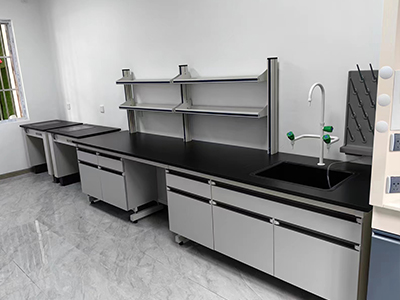
The Moisture Problem: Why MDF Fails Where HPL Succeeds
Moisture represents MDF's most critical weakness. The material's fine wood fibers absorb water rapidly, causing the board to swell to twice its original thickness when saturated. Even in moderately humid environments, unprotected MDF edges gradually deteriorate. Bathrooms, laundry rooms, commercial kitchens, and laboratory settings present particularly challenging conditions where MDF consistently underperforms.
While moisture-resistant MDF variants exist, they still cannot match HPL's inherent water resistance. The sealed, non-porous surface of High Pressure Laminate repels liquids rather than absorbing them. In hospital environments, laboratory countertops, and food preparation areas, this distinction becomes crucial for maintaining sanitary conditions and preventing bacterial growth in compromised surfaces.
Commercial kitchen operators and laboratory managers consistently report that HPL surfaces maintain structural integrity even with daily exposure to cleaning chemicals and water, while MDF-based solutions require replacement within months when subjected to similar conditions.
Real-World Impact: A hospitality group replacing kitchen cabinetry across 15 properties found that MDF installations in humid climates required replacement every 18-24 months, while HPL surfaces in identical conditions remained functional after 10+ years of continuous service.
Durability and Wear Resistance: The Daily Performance Gap
Surface durability separates adequate materials from exceptional ones. HPL demonstrates remarkable resistance to scratches, impacts, and abrasion thanks to its dense, cross-linked structure. The melamine overlay provides a hard protective layer that maintains appearance even under heavy commercial use.
MDF surfaces, by contrast, require protective coatings to achieve basic durability. The material itself remains relatively soft and prone to damage from impacts. Screws and fasteners lose grip in MDF over time as fine fibers compress around hardware, leading to loosened hinges and unstable installations. Cabinet doors and drawer fronts made from MDF frequently require hardware reinforcement or replacement.
| Performance Factor | MDF | HPL |
|---|---|---|
| Scratch Resistance | Low (requires protective coating) | Excellent (inherent property) |
| Impact Resistance | Moderate (prone to denting) | High (tested to ISO 4586) |
| Moisture Tolerance | Poor (swells when wet) | Excellent (non-porous surface) |
| Heat Resistance | Limited (coating dependent) | Superior (up to 180°C) |
| Chemical Resistance | Variable (surface dependent) | Excellent (certified grades available) |
| Typical Lifespan (commercial use) | 2-5 years | 10-20+ years |
The performance data becomes even more significant when considering total cost of ownership. While MDF may present lower initial material costs, frequent replacement cycles quickly erode any upfront savings. HPL installations in schools, hospitals, and commercial offices regularly serve for decades without requiring replacement.
Health and Safety Considerations: The Formaldehyde Factor
Indoor air quality concerns have pushed building materials under increasing scrutiny. MDF's reliance on urea-formaldehyde resin creates ongoing emission concerns. Until fully sealed, MDF releases formaldehyde gas for months or even years after manufacturing. The International Agency for Research on Cancer classifies formaldehyde as a known human carcinogen associated with respiratory issues and certain cancers.
When cutting or sanding MDF, workers face additional exposure risks from the dust, which contains both formaldehyde and fine particulates. Safety protocols require proper ventilation and respiratory protection when working with the material. These requirements add labor costs and complexity to installation projects.
HPL addresses these concerns through its manufacturing process. The high-temperature thermosetting reaction permanently binds resins within the material matrix, dramatically reducing volatile organic compound emissions. Once installed, HPL surfaces require no additional sealing to minimize formaldehyde release. For schools, healthcare facilities, and LEED-certified buildings, this distinction often determines material selection.
Ready to Upgrade Your Space with Premium HPL Solutions?
HUAJIALE delivers certified high-pressure laminate products trusted by commercial developers, laboratory designers, and hospitality groups across Asia. With over 10 years of manufacturing expertise and strict quality control meeting ISO 9001, ISO 14001, and EN 438 standards, we provide reliable HPL solutions for demanding applications.
Request Your Free Quote TodayInstallation and Maintenance: Practical Differences in Daily Use
Installation challenges differ significantly between these materials. MDF's extreme hardness makes it difficult to fasten properly. Standard nails bend unless pre-drilled holes are created, and screws installed into edges frequently split the material. The fuzzy edges require sanding and special primer before painting to avoid a sandpaper texture in the finished surface.
HPL laminates bond to various substrates using standard contact adhesives. The material cuts cleanly with carbide-tipped blades and accepts edge treatments readily. Professional installers consistently report faster installation times and fewer callbacks with HPL compared to MDF-based solutions.
Maintenance requirements tell an equally compelling story. HPL's non-porous surface cleans easily with standard household or commercial cleaners. The material resists staining from coffee, wine, and food products. Facilities managers report minimal maintenance costs over the lifespan of HPL installations.
MDF painted surfaces require gentle cleaning to avoid damaging protective coatings. Water exposure during cleaning must be minimized. Damaged areas cannot be repaired effectively and often necessitate complete panel replacement. These maintenance challenges accumulate substantial costs over time, particularly in high-traffic commercial environments.
Design Flexibility and Aesthetic Options
Both materials offer design versatility, though they achieve it through different means. MDF provides a smooth, uniform substrate ideal for painted finishes. Its lack of grain makes it suitable for crisp profiles in trim applications and allows for consistent paint coverage. Designers appreciate MDF for projects requiring flawless painted surfaces in controlled environments.
HPL delivers thousands of decorative options printed directly into the material. Wood grains, stone patterns, solid colors, and custom designs can be reproduced with remarkable fidelity. Unlike painted MDF, these patterns extend throughout the decorative layer and resist fading from UV exposure. The surface texture can be customized from high gloss to matte finishes, with specialized textures mimicking natural materials.
For commercial spaces requiring brand consistency across multiple locations, HPL offers significant advantages. Each production run maintains identical color and pattern, unlike paint batches which vary. This consistency ensures that renovations and expansions perfectly match existing installations years later.
Cost Analysis: Initial Investment vs. Long-Term Value
Initial material costs often favor MDF, particularly in large-volume applications. However, comprehensive cost analysis must include installation labor, maintenance requirements, and replacement cycles. When these factors enter the equation, HPL frequently demonstrates superior value.
Consider a typical commercial kitchen renovation. MDF cabinetry might cost 30-40% less initially than HPL solutions. However, that installation will likely require replacement within 3-5 years due to moisture damage and wear. The HPL installation operates effectively for 15-20 years or longer. Over a 20-year period, the MDF approach requires 4-6 replacement cycles, each involving material costs, labor, and business disruption.
Laboratory environments present even more dramatic cost differences. Chemical-resistant HPL surfaces withstand acids, bases, and solvents that would destroy MDF within weeks. Specialized laboratory countertops manufactured from chemical-resistant HPL represent a one-time investment versus recurring replacement cycles with inadequate materials.
Environmental Impact and Sustainability Considerations
Sustainability assessments must examine the complete lifecycle impact rather than focusing solely on recycled content or renewable materials. MDF utilizes wood waste products, which appears environmentally positive initially. However, the short lifespan in many applications means materials enter landfills repeatedly over decades. The formaldehyde content also complicates end-of-life disposal and recycling options.
HPL's extended service life dramatically reduces material consumption over time. A single HPL installation replacing 4-6 MDF installations over 20 years represents substantial resource conservation. Modern HPL manufacturing has also improved environmental profiles through reduced VOC resins and energy-efficient production processes. Many manufacturers now offer products meeting stringent environmental certifications including GREENGUARD and low-formaldehyde standards.
The recyclability factor deserves attention as well. While neither material offers straightforward recycling paths currently, HPL's stability allows for reuse in certain applications. MDF's tendency to degrade limits second-use opportunities.
Application-Specific Recommendations
While this analysis emphasizes HPL's advantages, specific applications may suit each material differently. Understanding these distinctions helps optimize material selection for particular projects.
Where HPL Excels:
Commercial kitchen surfaces and cabinetry exposed to heat, moisture, and heavy use
Laboratory countertops and furniture requiring chemical resistance
Healthcare facilities prioritizing hygiene and low-emission materials
High-traffic retail and hospitality environments
Bathroom and laundry applications where moisture exposure is inevitable
Exterior wall cladding (using HPL HPL grades)
Educational facilities requiring durable, easy-maintenance surfaces
Limited MDF Applications:
Interior trim and molding in climate-controlled residential spaces
Temporary installations or short-term display fixtures
Projects where perfectly smooth painted surfaces are essential and environmental controls prevent moisture exposure
Low-budget residential renovations in dry climates with minimal traffic
Making the Right Choice: Key Decision Factors
When evaluating MDF versus HPL for any project, several critical questions guide optimal material selection. Will the surface encounter moisture regularly, even through cleaning? How much daily wear will the installation experience? Are there health and safety requirements regarding VOC emissions? What is the expected project lifespan, and how does replacement cost factor into total expenditure?
For most commercial, institutional, and high-performance residential applications, HPL delivers superior results. The material's resistance to moisture, chemicals, heat, and wear makes it the practical choice for environments where failure means expensive replacement and business disruption. The sealed surface addresses air quality concerns while requiring minimal maintenance over extended service periods.
Working with experienced HPL manufacturers ensures access to specialized grades engineered for specific challenges. Chemical-resistant formulations, fire-rated options, antibacterial surfaces, and custom designs allow precise matching of material properties to application requirements. This level of customization is difficult to achieve with generic MDF products.
Partnering with Reliable HPL Suppliers
Material quality varies significantly among manufacturers. When selecting HPL for critical applications, certification standards provide essential quality assurance. Look for suppliers meeting ISO 9001 quality management requirements and environmental standards like ISO 14001. European Standard EN 438 compliance ensures that laminates meet rigorous performance criteria for various applications.
HUAJIALE specializes in manufacturing high-pressure laminates for demanding commercial environments. Our production facility serves clients across hospitality, healthcare, education, and laboratory sectors with customized HPL solutions. From initial design consultation through installation support, we provide comprehensive expertise for projects requiring reliable, high-performance surface materials.
Our product range includes standard decorative laminates, HPL phenolic panels for high-impact applications, chemical-resistant grades for laboratory use, and fire-rated options for safety-critical installations. With strict quality control at every production stage and certifications meeting international standards, HUAJIALE delivers consistent performance across projects of any scale.
Summary: The Clear Winner for Long-Term Performance
The comparison between MDF and HPL reveals fundamental differences in material composition, manufacturing processes, and real-world performance. While MDF may serve adequately in limited applications with controlled conditions, High Pressure Laminate consistently outperforms across the metrics that matter most for commercial and institutional environments.
HPL's superior moisture resistance, exceptional durability, low emission profile, and extended service life make it the intelligent choice for projects prioritizing long-term value over initial cost minimization. The material's versatility across applications from kitchen surfaces to laboratory countertops to exterior cladding provides design flexibility without compromising performance.
For architects, designers, and facility managers seeking materials that deliver reliable performance year after year, HPL represents a proven solution backed by decades of commercial use worldwide. When partnered with experienced manufacturers who understand application-specific requirements, HPL installations provide lasting value that budget alternatives simply cannot match.
Frequently Asked Questions
Is HPL more expensive than MDF?
Initially yes, but lifecycle costs favor HPL significantly. MDF requires replacement every 3-5 years in commercial settings, while HPL lasts 15-20+ years. Over time, HPL costs less due to fewer replacement cycles and minimal maintenance requirements.
Can MDF be used in kitchens or bathrooms?
MDF performs poorly in moisture-prone areas. Even moisture-resistant variants cannot match HPL's water resistance. For bathrooms and kitchens, HPL provides superior durability and prevents the swelling and deterioration common with MDF in these environments.
Does HPL emit formaldehyde like MDF?
HPL emissions are dramatically lower than MDF. The high-temperature manufacturing process permanently binds resins, while MDF continues releasing formaldehyde for months or years. For health-conscious applications, HPL is the safer choice.
Which material is easier to install?
HPL generally installs faster. It bonds easily to substrates, cuts cleanly, and doesn't require the extensive edge preparation MDF needs. MDF's tendency to split when fastened and its fuzzy edges add installation complexity and time.
Can HPL withstand commercial kitchen conditions?
Yes, HPL excels in commercial kitchens. It resists heat up to 180°C, repels moisture, and withstands frequent cleaning with commercial-grade chemicals. Many restaurants and hotel kitchens rely on HPL for its proven durability in demanding environments.
What makes HUAJIALE a reliable HPL supplier?
HUAJIALE offers over 10 years of manufacturing expertise with strict quality control meeting ISO 9001, ISO 14001, and EN 438 standards. We specialize in customized solutions for commercial, healthcare, laboratory, and hospitality applications with comprehensive project support from design to installation.
How do I maintain HPL surfaces?
HPL requires minimal maintenance. Clean with standard household or commercial cleaners and water. The non-porous surface resists staining and doesn't require special treatments or protective coatings, making it ideal for high-traffic commercial applications.
CATEGORIES:

 Contact Us
 Online Sales
 Case Study
 News Center
 Product Brochure


